Behind the Scenes
Real Photo or AI? How to Spot an AI-Generated Flower PNG
Search for a flower PNG today and many of the results will have been generated by AI. Some are labelled; many are not. If you care about what goes into your design, whether for the look, the licensing or simply honesty with your own customers, it helps to know what to look for.
None of these signs is proof on its own. Generators improve all the time. But together they are a good guide.
Look at the structure of the flower
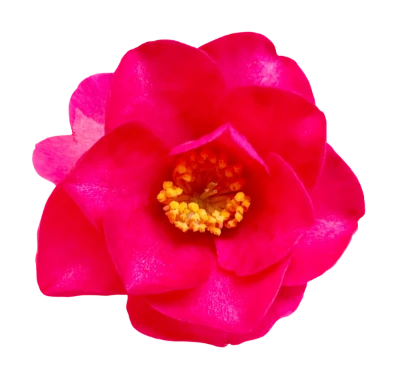
Real flowers follow rules. A species has a typical number of petals, arranged in a typical way, and the stamens and center have a consistent structure. Generated flowers often get this subtly wrong: petals that merge into each other, a center that turns into a smudge, a stem that joins the flower in an impossible place, or a bloom that looks like two species mixed together.
Look at the imperfections
A photographed flower has small, specific flaws: a torn petal edge, a brown spot, a bit of pollen, a vein that runs a little off-center. AI images tend to be either too clean or uniformly “textured”, with the same grain everywhere. Ask whether each flaw looks like something that happened to this particular flower.
Look at the leaves and the light
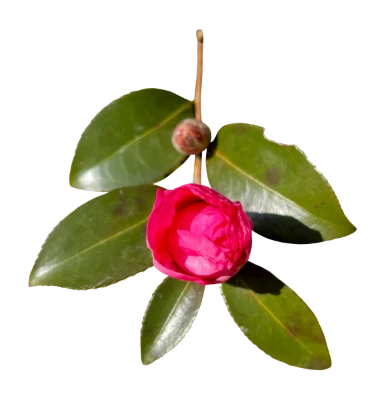
Leaves are a common giveaway. Check whether their veins are consistent, whether the leaf edges are serrated or smooth in a way that matches the plant, and whether they actually attach to the stem. Then look at the light: in a real photo, highlights and shadows all agree with one light source, while generated images sometimes light different parts from different directions.
Look at a whole set
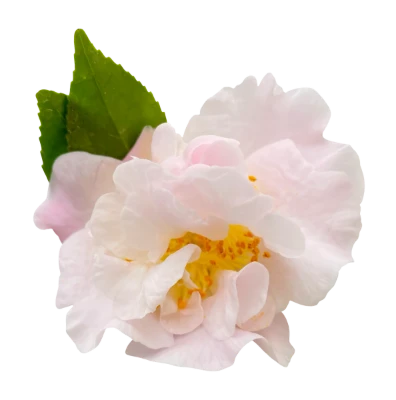
One image can fool you; twenty from the same seller usually cannot. Generated sets often repeat the same composition, the same “perfect” bloom shape, or the same unusual color in a way that real flowers rarely do. A photographed collection looks like a real garden: lots of variation, and not every flower at its best.
Ask about the source
A seller who photographs their own subjects can usually tell you how: what was photographed, and how it was cut out. Some images also carry content credentials (C2PA) metadata that records how they were made, although most images online still do not have it and it can be removed.
Why it matters
- Licensing. In the United States, the Copyright Office has taken the position that material generated entirely by AI is not protected by copyright. That can make it unclear what rights a seller is actually able to give you.
- Marketplaces and clients. Some marketplaces ask sellers to disclose AI-generated content, and some clients ask for designs without it.
- Close-up use. In print and at large sizes, the small structural errors of generated flowers become visible. Real petals hold up to close inspection because they are real.
Where PNG Heaven stands
Every image we sell starts with a real subject photographed by us, is cut out from that photograph and refined by hand. We do not generate subjects with AI, and every image page says so. You can read more about how we work in Our Standard and in how we turn real photographs into PNG assets.